Receiving
Incoming inspection: shipment quality and completeness
Learn moreMACHINE VISION · TRACK & TRACE · WAREHOUSE ROBOTS
Quality inspection, code reading, assembly verification, warehouse transport — Hikrobot equipment already does all of it. We’re an official Hikrobot partner with 130+ deployed projects. Equipment ships factory-direct; in-stock items typically arrive by air in about two weeks. Every task starts with a free feasibility check. Pick yours:
FIND YOUR AREA
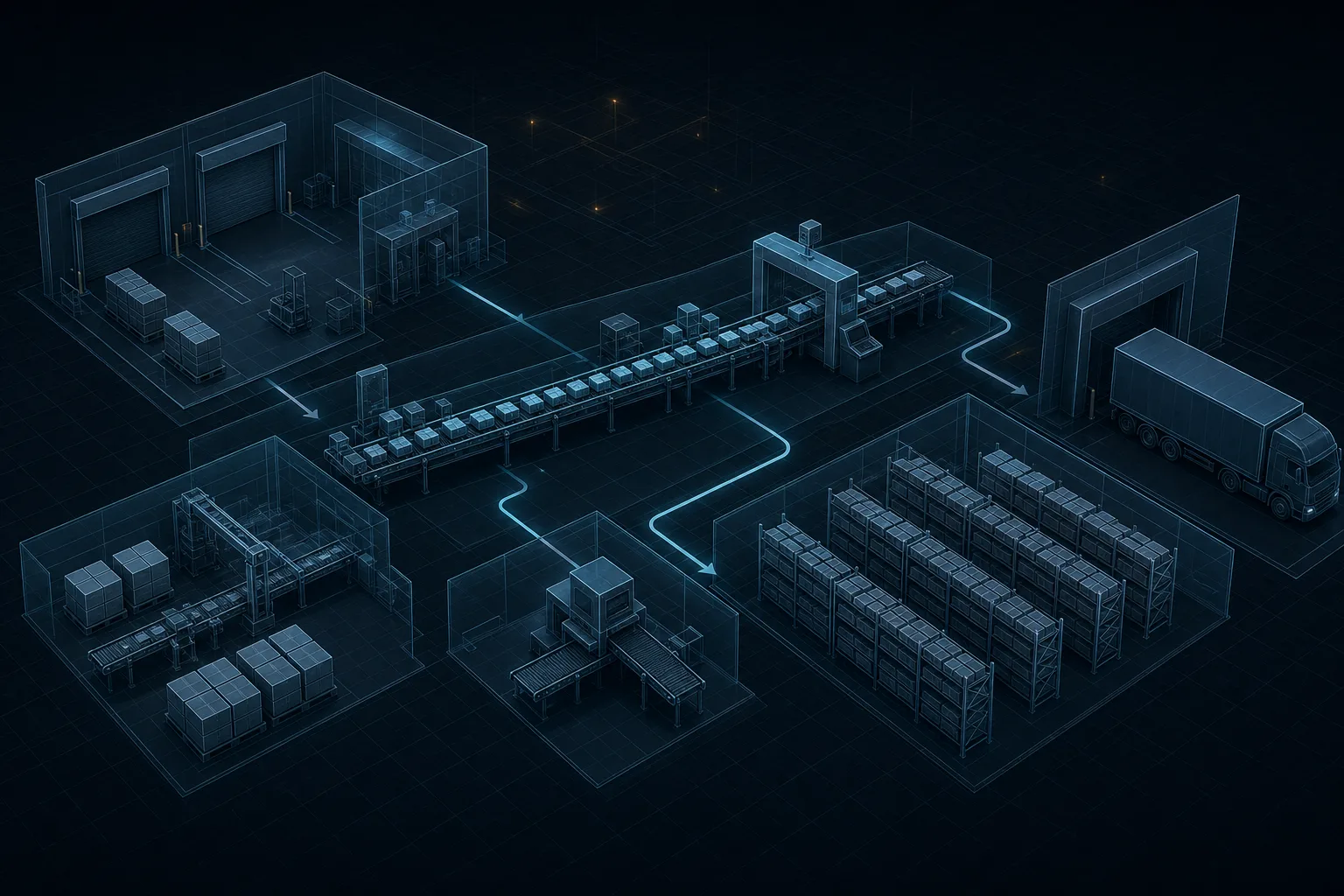
A typical factory layout. The dots are places where cameras and robots already do the job. Tap your area.
A typical factory layout. The dots are places where cameras and robots already do the job. Tap your area.
Receiving
Incoming inspection: shipment quality and completeness
Learn moreProduction line
In-line inspection: shape, surface, and integrity
Learn moreFilling & packing
Fill level, label, and seal integrity
Learn moreMarking
Printing and reading DataMatrix, serialization, aggregation
Learn morePackaging
Kit completeness, orientation, case packing
Learn moreWarehouse
Material transport by AMRs, integrated with your inventory system
Learn moreShipping
Code reading on the flow, sorting
Learn moreOne real-world example from each area, showing the range of applications and budgets.
 Food production
we catch over 98%
 Food production
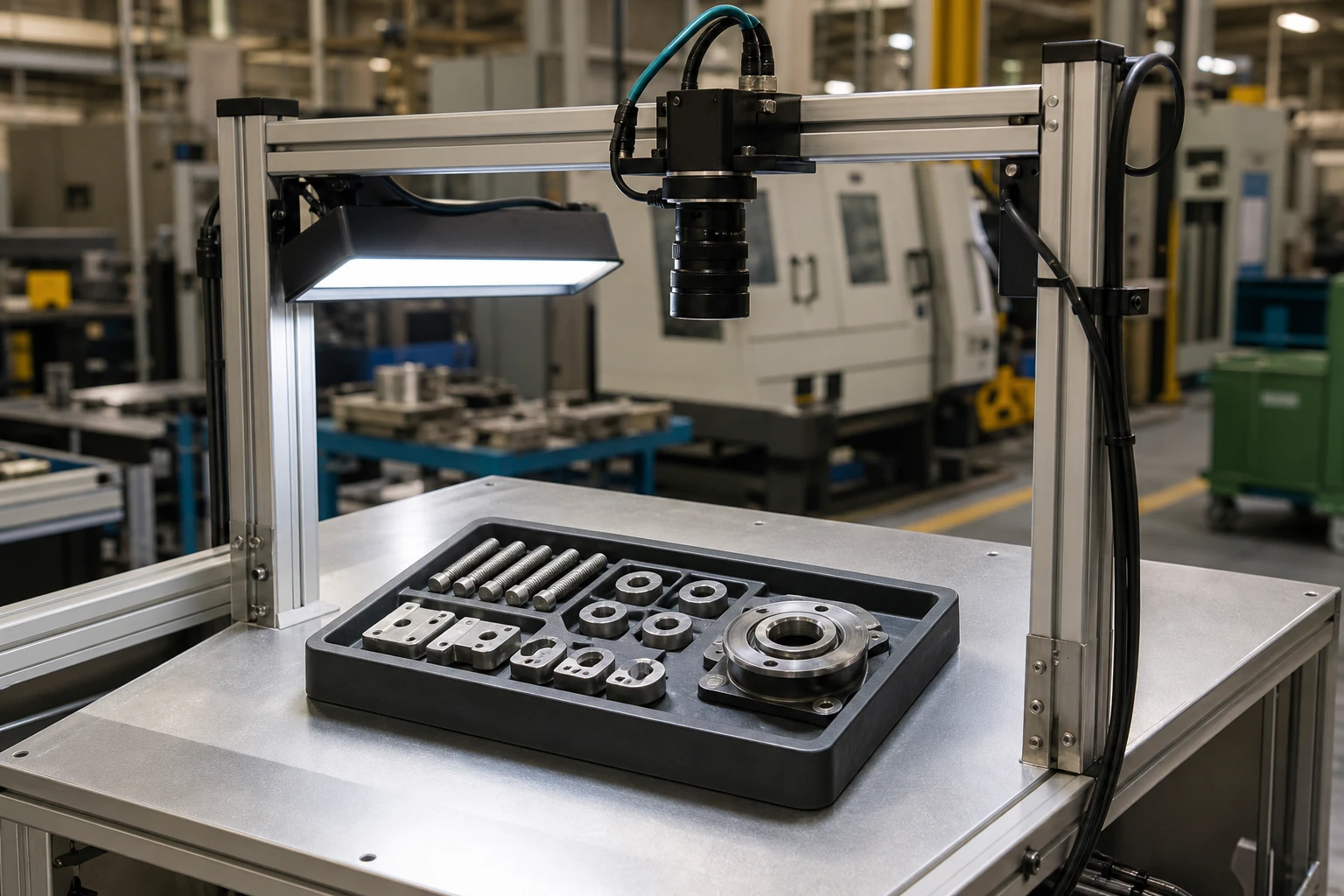 Machinery manufacturing
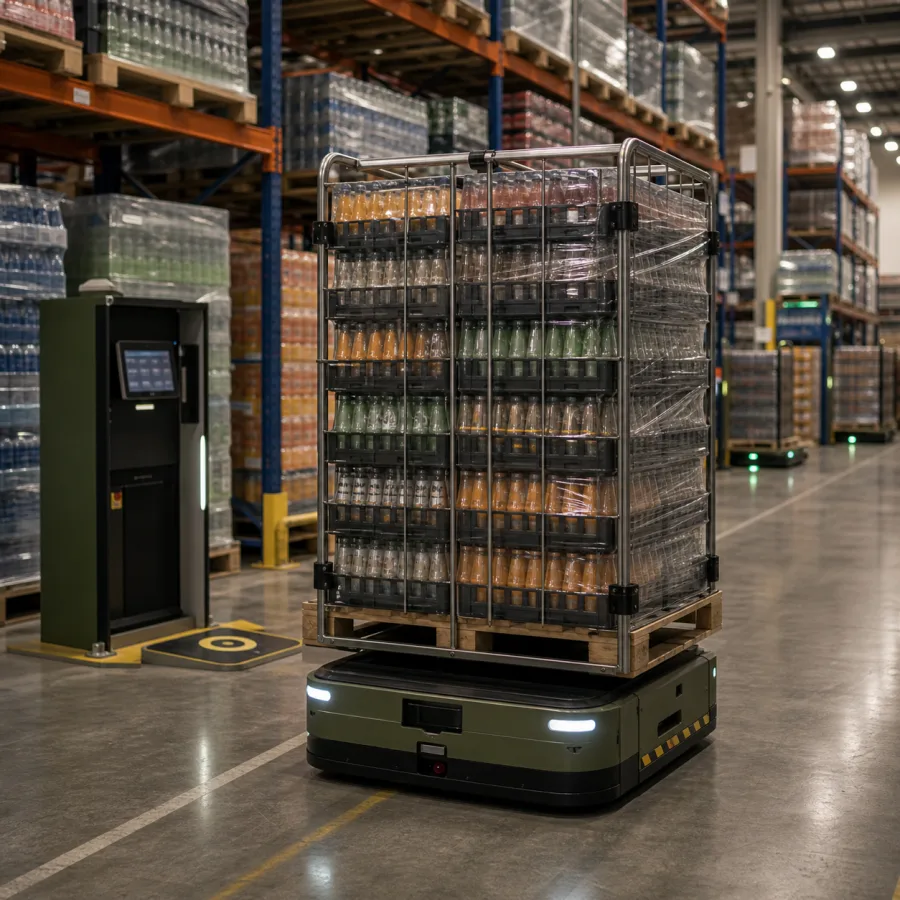 Beverages
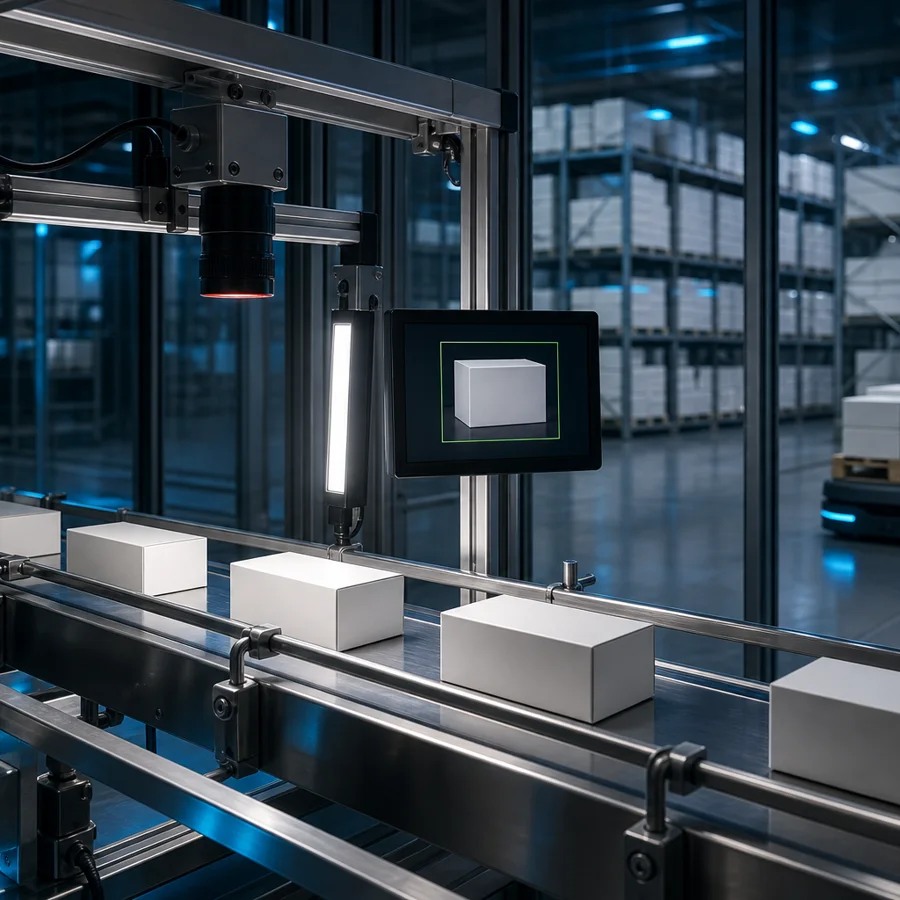 Pharma
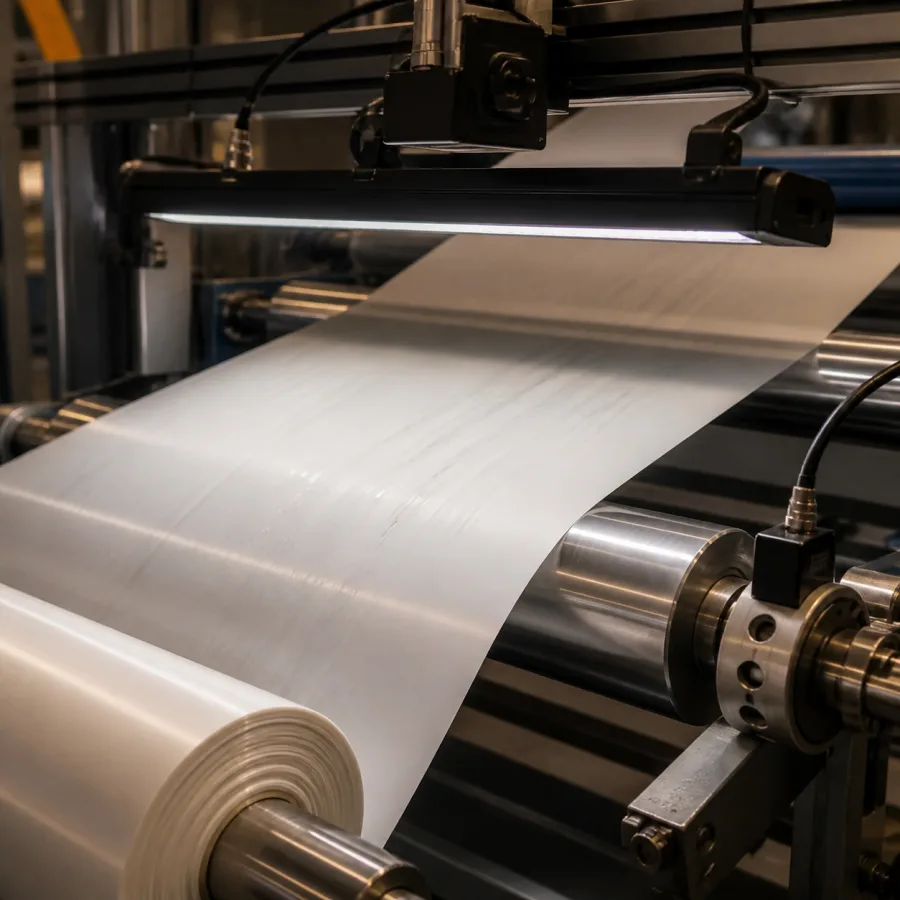 Roll materials
Food production
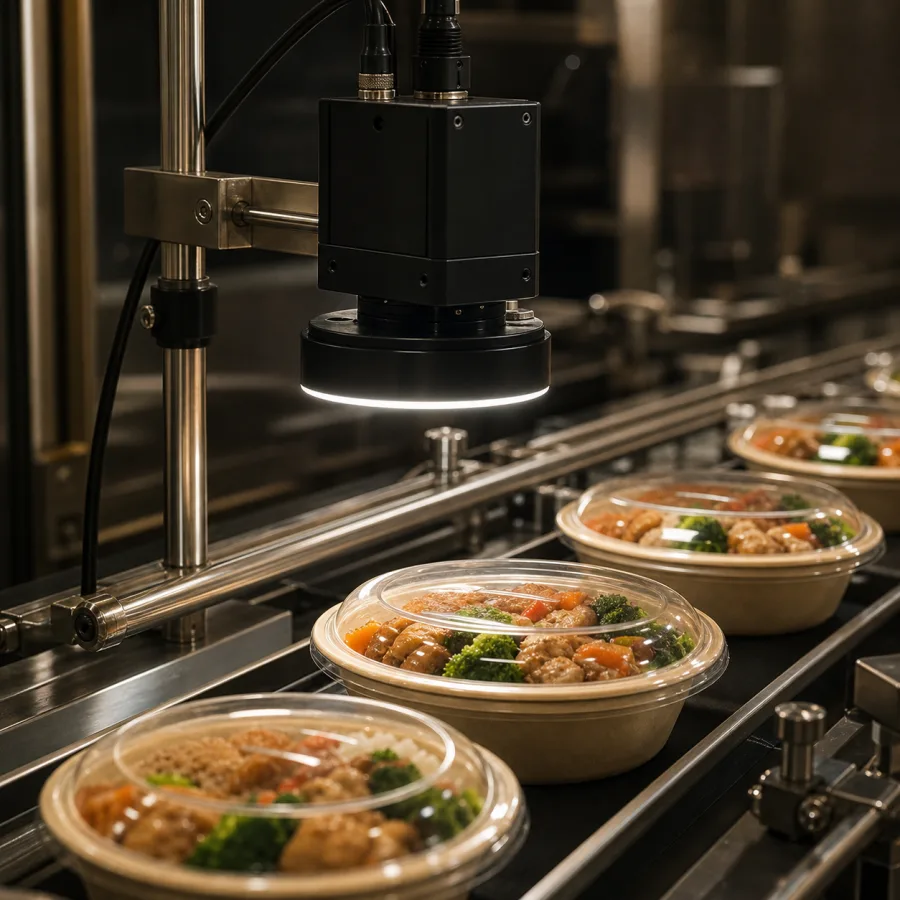
A ready-meal tray is only as reliable as its seal. A few millimeters of film skew, or an edge that isn't fully pressed, and the meal loses its seal inside the shipping case. And it's rarely your inspector who finds it — it's the retail chain, and what comes back isn't one tray, it's the whole batch. Eyes are a poor tool here: the tray rim reflects light, and hundreds of trays pass the operator every shift.
A smart camera with a ring light over the sealing section. We tuned the light so the glare started working for us: a good seal reads in the frame as one continuous line, while a skew or an incomplete press breaks that line — and the camera sees it instantly. Special attention goes to the tray edges, where the film shifts most often.
The camera catches over 98% of defective trays — a figure from commissioning on a real line, not a promise from a catalog. Rejects are pulled before case packing, and unsealed meals stopped traveling to stores. The operator no longer stares at every tray — they respond when the system calls.
| Task | film skew and under-pressed tray edge |
|---|---|
| Environment | wet zone of a food plant, production line speed |
| Setup | smart camera, lens, ring light, operator screen |
| Reaction | operator alert before case packing |
| Budget | from SAR 9,750 (entry-level station) |
Discuss a similar application
more about this solutionFood production
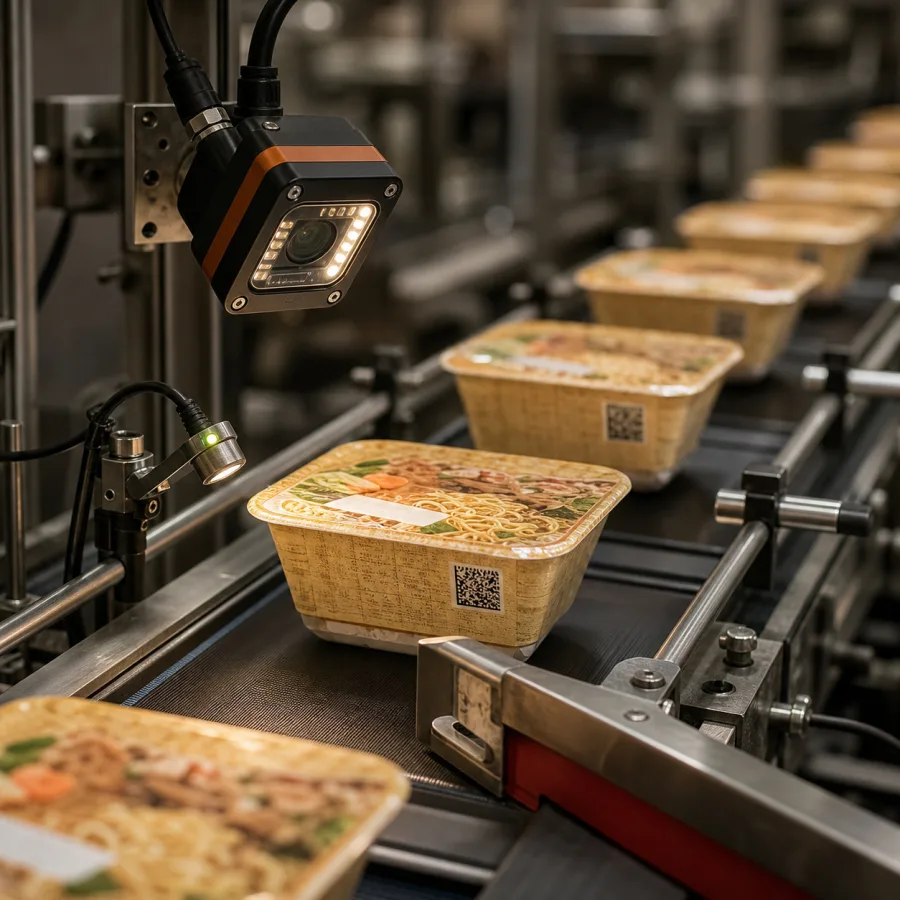
Serialization arrived on a line that was never built for it: the glossy film glares, the packing speed is high, and every unread code means either a line stop or a pack that can't be shipped. Manual rechecking couldn't keep pace with production.
Readers with a trigger sensor that says "shoot now" — the frame is taken at the exact moment the pack passes, and speed stops being a problem. If a code still doesn't read, the pack is automatically diverted off the line. Production doesn't stop.
Codes are read reliably at production speed, and unread packs are diverted before shipping — serialization stopped being a topic at morning meetings.
| Task | reading serialized codes at speed, glaring film |
|---|---|
| Speed | production speed of the packing line |
| Reaction | automatic rejection of unread packs |
| Setup | readers, trigger sensor, controller, reject signal |
| Budget | from SAR 20,625 |
Discuss a similar application
more about this solutionMachinery manufacturing
A kit of dozens of items is assembled by hand. Attention naturally drops over a shift — and a missing item often isn't found until the customer opens the package, triggering a claim and a "who packed this" investigation.
A completeness station: a camera over the fixture tray, a reference configuration of the correct kit in the system, and an on-screen prompt showing which cavity is empty or holds the wrong item. A line interlock backs it up: an incomplete kit cannot advance to packing.
Missing parts are caught before packing, not after delivery. The operator stopped being "the last line of defense": the operator assembles, the camera verifies.
| Task | verify that every part made it into the kit |
|---|---|
| Reaction | on-screen prompt + line signal |
| Setup | camera, lighting, operator screen, controller |
| Budget | from SAR 6,000 |
Discuss a similar application
more about this solutionBeverages
Pallets between the packing area and storage were moved with manual pallet jacks — operators tied up in repetitive travel that adds nothing to the warehouse except fatigue.
A pilot with a single robot: we mapped the warehouse, set the routes and safety zones, installed a charging station. The warehouse wasn't rebuilt — the robot drives the same aisles people walk.
The main result is a controllable decision: the success criteria were fixed before the start, and scaling was judged by the pilot's numbers, not by gut feeling.
| Task | moving pallets: packing → storage |
|---|---|
| Format | a one-robot pilot, no warehouse rebuild |
| Setup | robot, charging station, warehouse map |
| Budget | from SAR 43,125 |
Discuss a similar application
more about this solutionPharma
Serialization, aggregation, visual inspection and the warehouse lived in separate systems. At every handoff the data had to be reconciled by hand, and during investigations batches "got lost" between areas.
One end-to-end loop: readers and cameras on the line, data feeds into the ERP and warehouse system, robots on the transfers. The code is printed, read, aggregated and traced down to the warehouse cell — with no manual bridges between systems.
The batch is traceable straight through production and warehouse. One contractor owns the code’s complete path — nothing left for vendors to argue about.
| Task | serialization + aggregation + warehouse in one loop |
|---|---|
| Integration | ERP, warehouse system, the RSD track & trace system |
| Setup | readers, cameras, controllers, integration, mobile robots |
| Budget | from SAR 58,125 |
Discuss a similar application
more about this solutionRoll materials
A defect on the web — a scratch or a hole from 0.2 mm — hides in hundreds of meters of roll. Sampling-based inspection meant exactly one thing: sometimes the customer received a roll with a defect in the middle, and the claim came back for the whole batch.
A line-scan camera: it captures the web line by line, like an office scanner captures a page — only at production speed. The result is a continuous scan of the full width and full length of the roll, without a single missed metre.
One hundred percent of the web is inspected instead of a sample. The defect is known to the metre of the roll — you can cut out one section instead of scrapping the whole batch.
| Task | scratches and holes from 0.2 mm on the web |
|---|---|
| Format | continuous web, inspection at production speed |
| Setup | line-scan camera, web travel sensor, line light, industrial PC |
| Budget | from SAR 6,750 |
Discuss a similar application
more about this solutionThe first reply arrives within 4 business hours: yes, no, or "needs a test" — and what to do next. If a camera isn't the right tool, you'll know from the very first reply.
or just send a photo of the task via “Message us”
official Hikrobot partner130+ deployed projectsfactory-direct supplyin-stock items ~2 weeks by air
Choose your area