 Machinery manufacturing
Every part in the kit? A completeness station that guides the operator
from SAR 6,000
COMPLETENESS · ASSEMBLY · PACKING
Two questions decide the fate of a station like this: what happens to it when the product changes, and how many times it stops the line for nothing. We answer both with a check, not with words: send photos of your kit to start — if the task looks feasible, we'll test physical samples and send back a video with an engineering report, free. An entry-level station starts at ~SAR 3,375.
verification videoengineering reportquote — in 2–3 business days after your samples arrive
130+ deployed projectsofficial Hikrobot partneryour own line lead does the changeovers
From a SAR 3,375 presence check to multi-zone verification — every card shows what the solution is made of and how it survives a product change.
Machinery manufacturing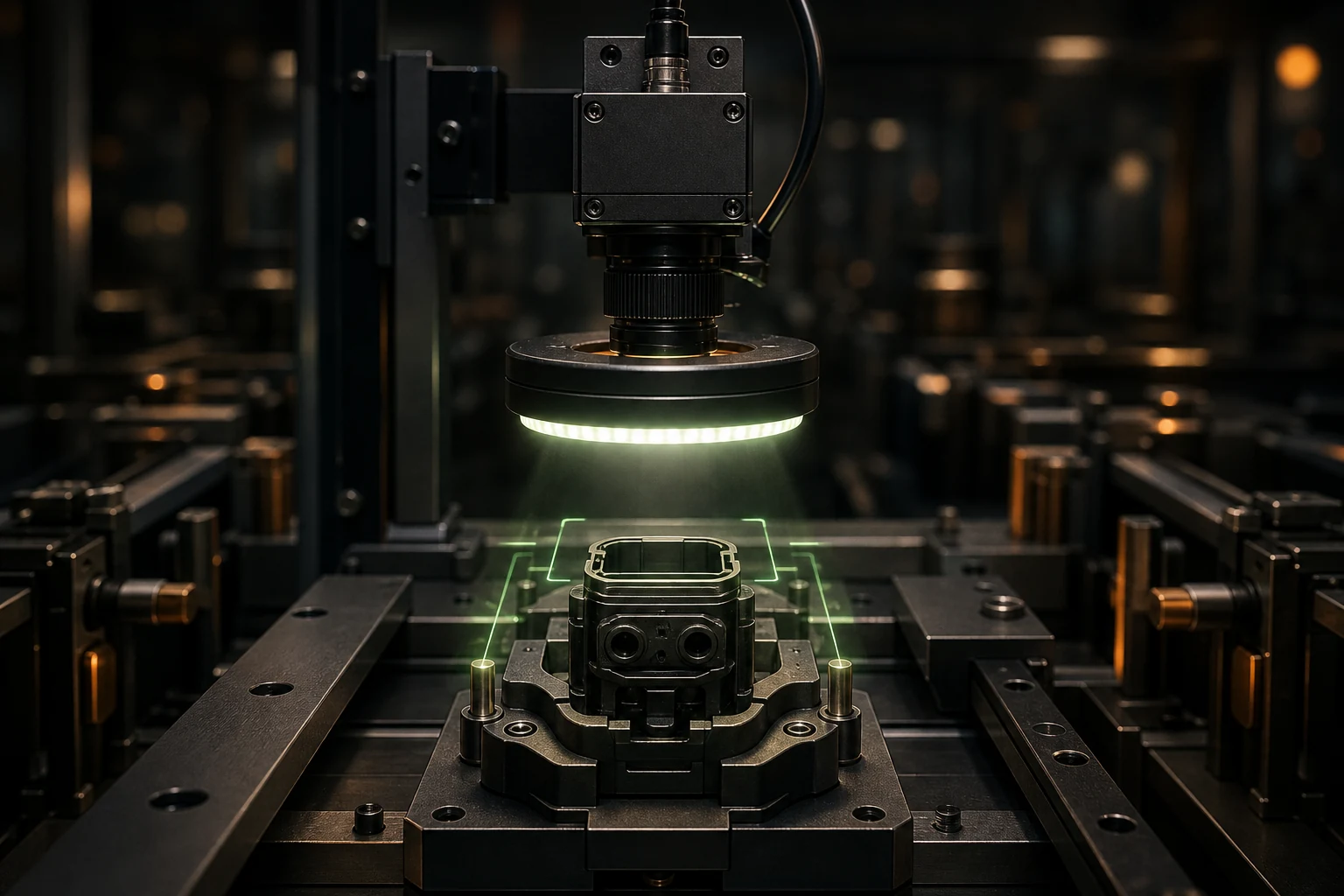 Packaging
 Food production
we catch over 98%
 Electronics
 Automotive
Machinery manufacturing
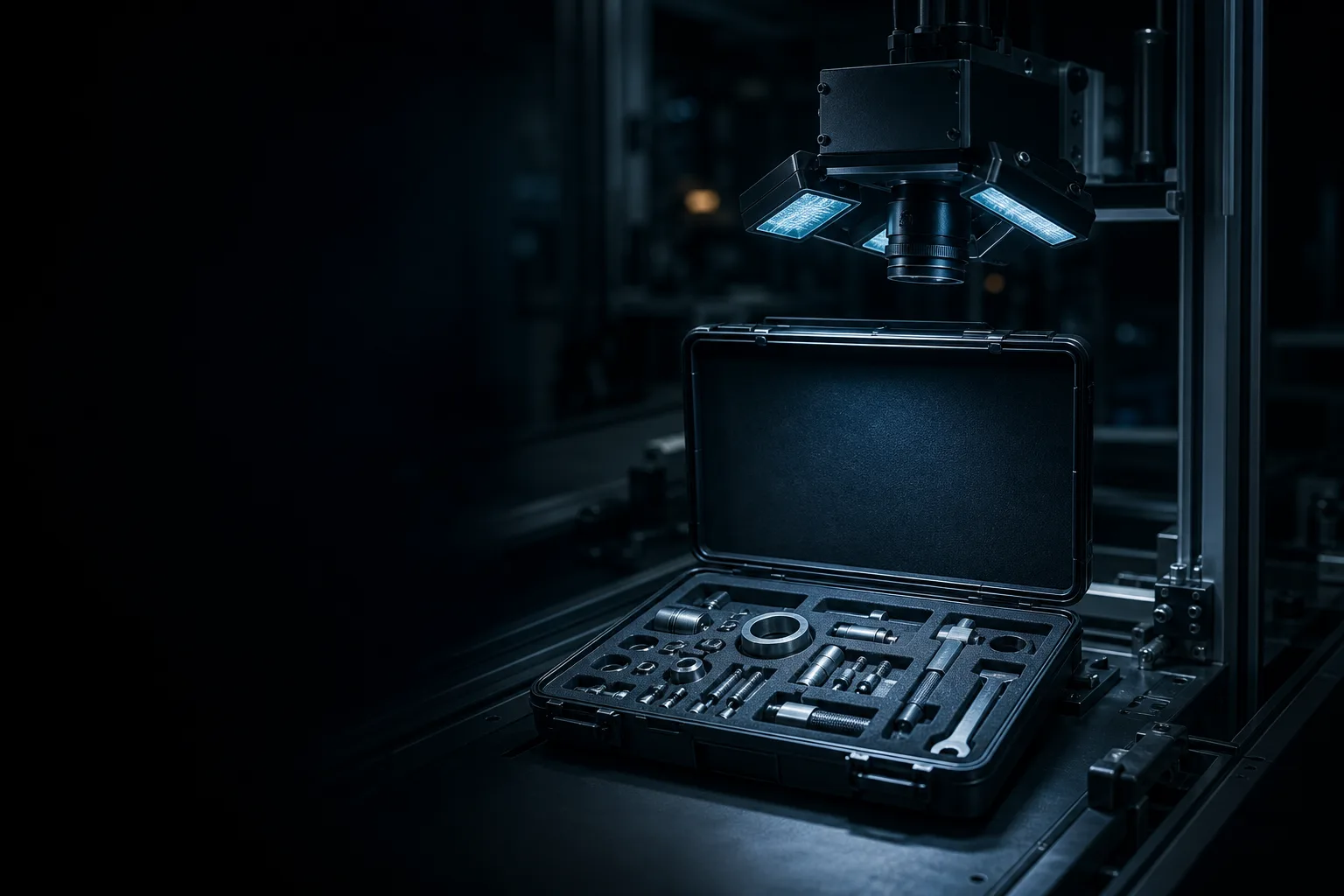
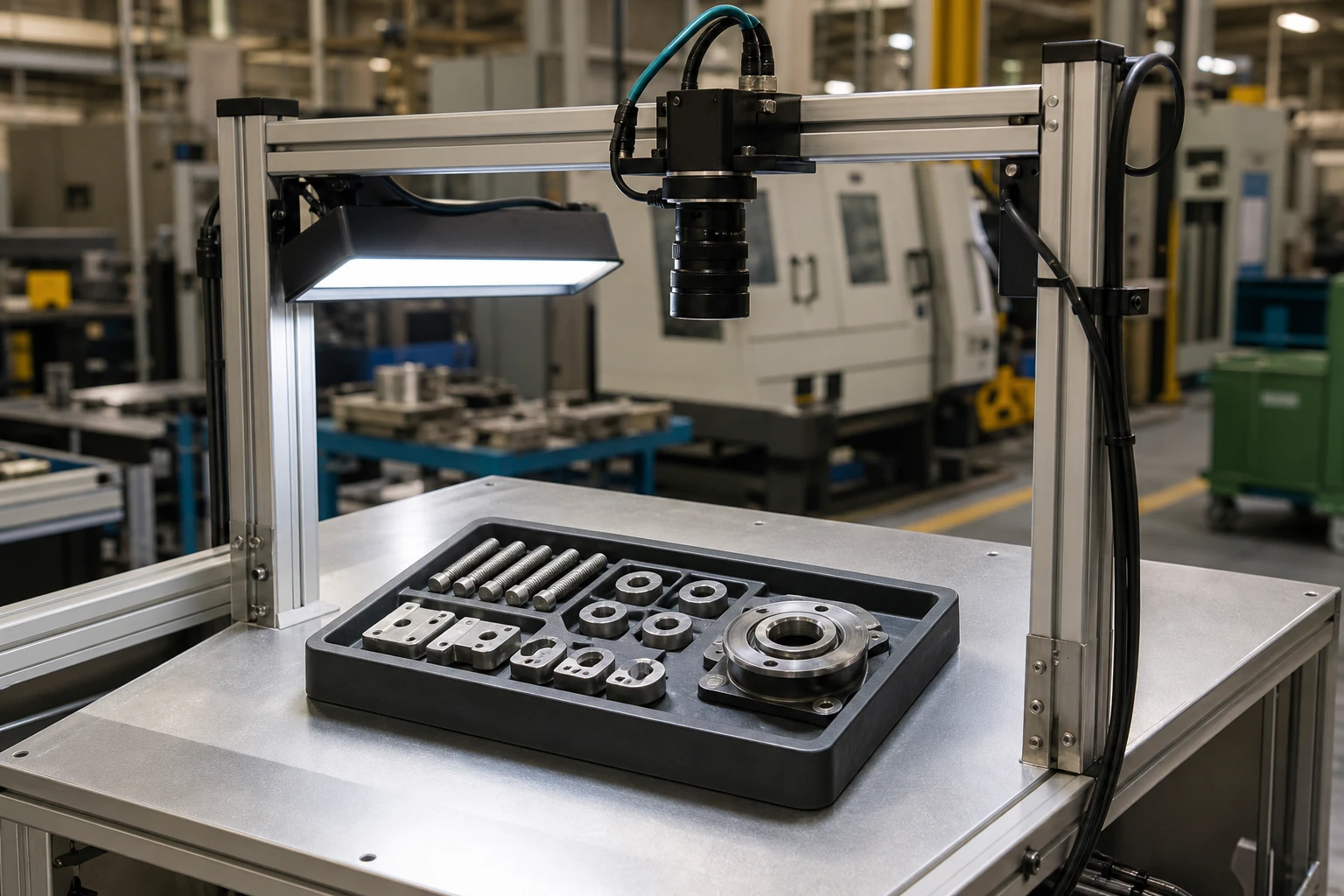
A kit of dozens of items is assembled by hand. Attention naturally drops over a shift — and a missing item often isn't found until the customer opens the package, triggering a claim and a "who packed this" investigation.
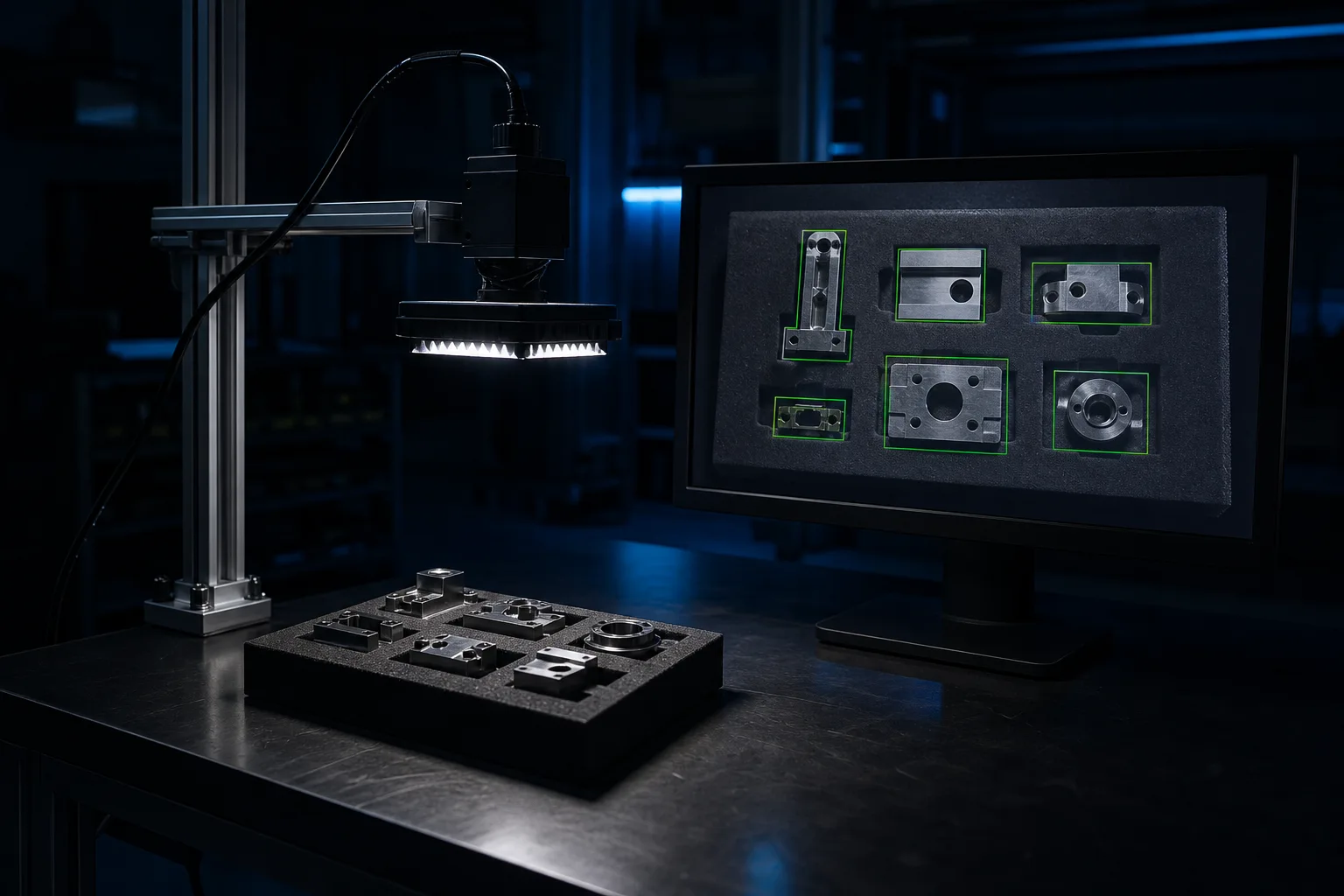
A completeness station: a camera over the fixture tray, a reference configuration of the correct kit in the system, and an on-screen prompt showing which cavity is empty or holds the wrong item. A line interlock backs it up: an incomplete kit cannot advance to packing.
Missing parts are caught before packing, not after delivery. The operator stopped being "the last line of defense": the operator assembles, the camera verifies.
| Task | verify that every part made it into the kit |
|---|---|
| Reaction | on-screen prompt + line signal |
| Setup | camera, lighting, operator screen, controller |
| Budget | from SAR 6,000 |
Check my assembly the same way
Packaging
A part goes into its packaging incorrectly oriented, or not fully seated — downstream it gets jammed, crushed, or shipped to the customer "upside down". The mistake itself costs pennies; the consequences are repacking and claims.
A camera that checks the part's position before the next step. Sitting wrong — the operator sees it before the part travels on.
Orientation errors stopped reaching the packing step. Incidentally, this is the cheapest station in our practice — from ~SAR 3,375 — and it's often where plants start, to try machine vision without betting big.
| Task | part incorrectly oriented or not fully seated |
|---|---|
| Setup | camera, lighting, mount, screen |
| Budget | from SAR 3,375 |
Check my assembly the same way
Food production
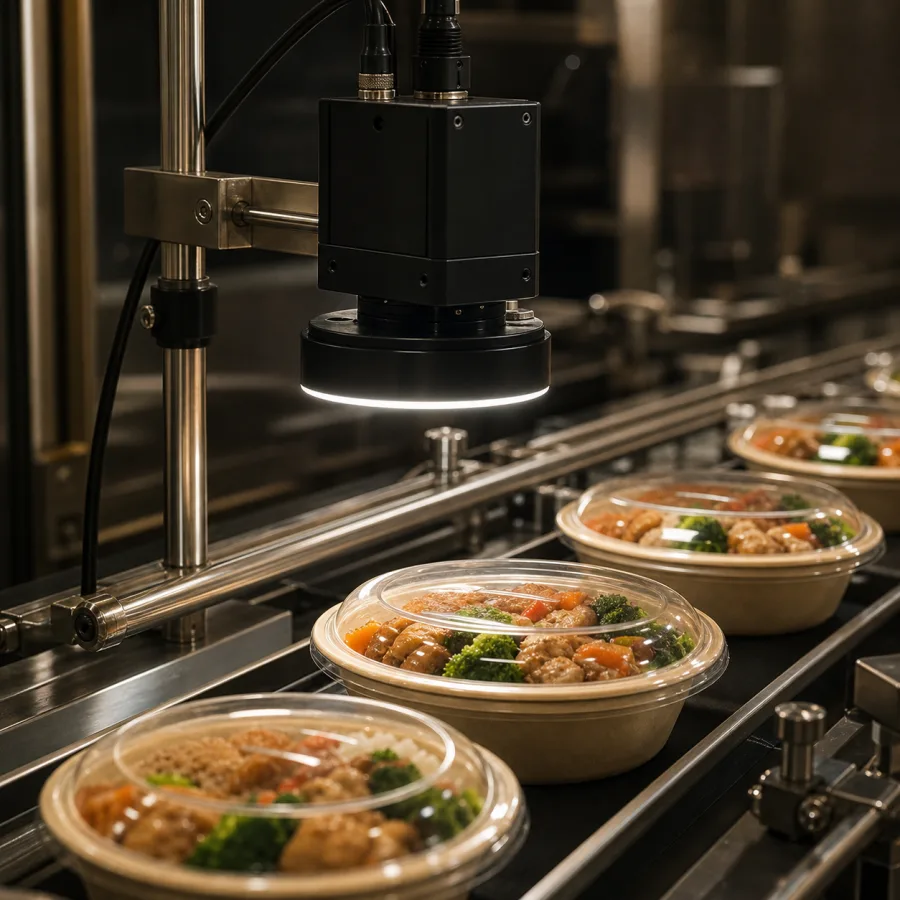
A meal is assembled from several components, and the final assembly step is sealing the tray. A skewed film or an under-pressed edge — and a correctly assembled meal still ships as a reject.
A smart camera with a ring light over the sealing section: it checks the seal contour and the risk zones along the edge — the final assembly check before the box.
The camera catches over 98% of defective trays — a figure from commissioning on a real line. An unsealed tray is pulled before packing. And when the menu changes, the new tray gets its own reference — the station lives on.
| Task | verifying the final assembly step (the seal) |
|---|---|
| Variability | several tray formats — a reference for each |
| Setup | smart camera, ring light, operator screen |
| Budget | from SAR 9,750 |
Check my assembly the same way
Electronics
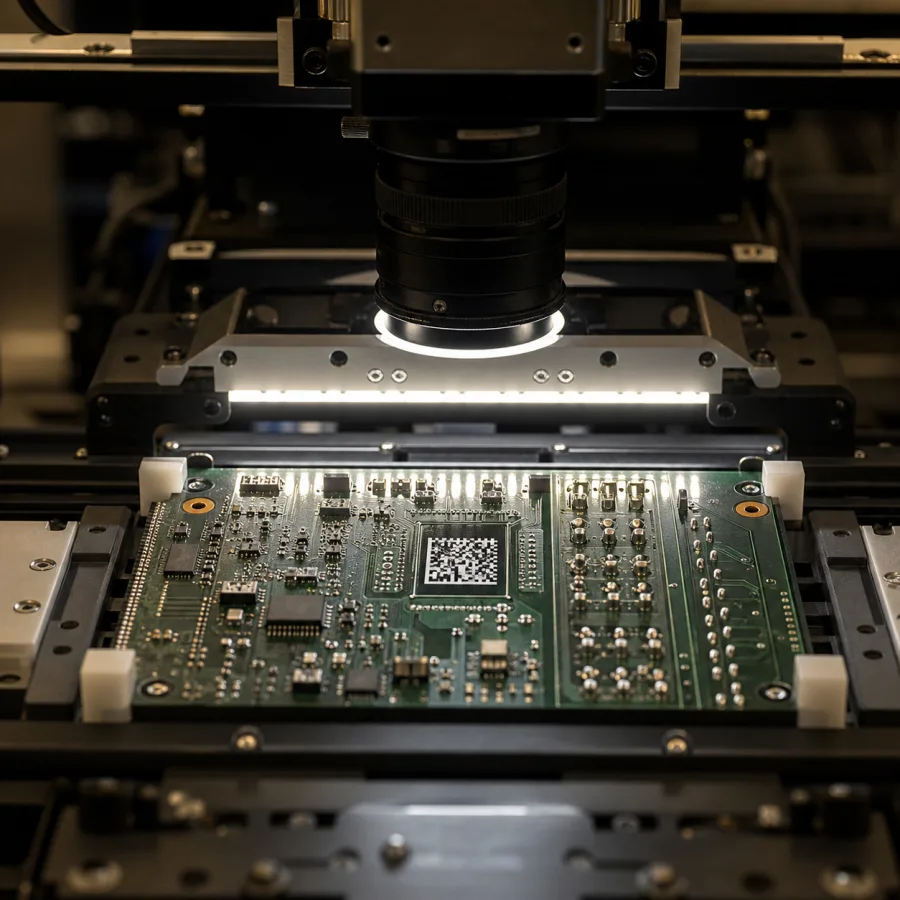
For a board, completeness means components and their solder. A missing or misaligned element from 0.15 mm can't be inspected reliably by eye on a moving line.
A high-resolution camera that checks every board against a reference: are all components present, correctly positioned and acceptably soldered. A new board revision comes out — a new reference is created, the station isn't rebuilt.
Placement and solder defects are visible separately from other rejects. Board revisions keep changing — the station keeps working.
| Task | board completeness: components + solder from 0.15 mm |
|---|---|
| Variability | board revisions — a reference per revision |
| Setup | 12 MP camera, lighting |
| Budget | from SAR 6,000 |
Check my assembly the same way
Automotive
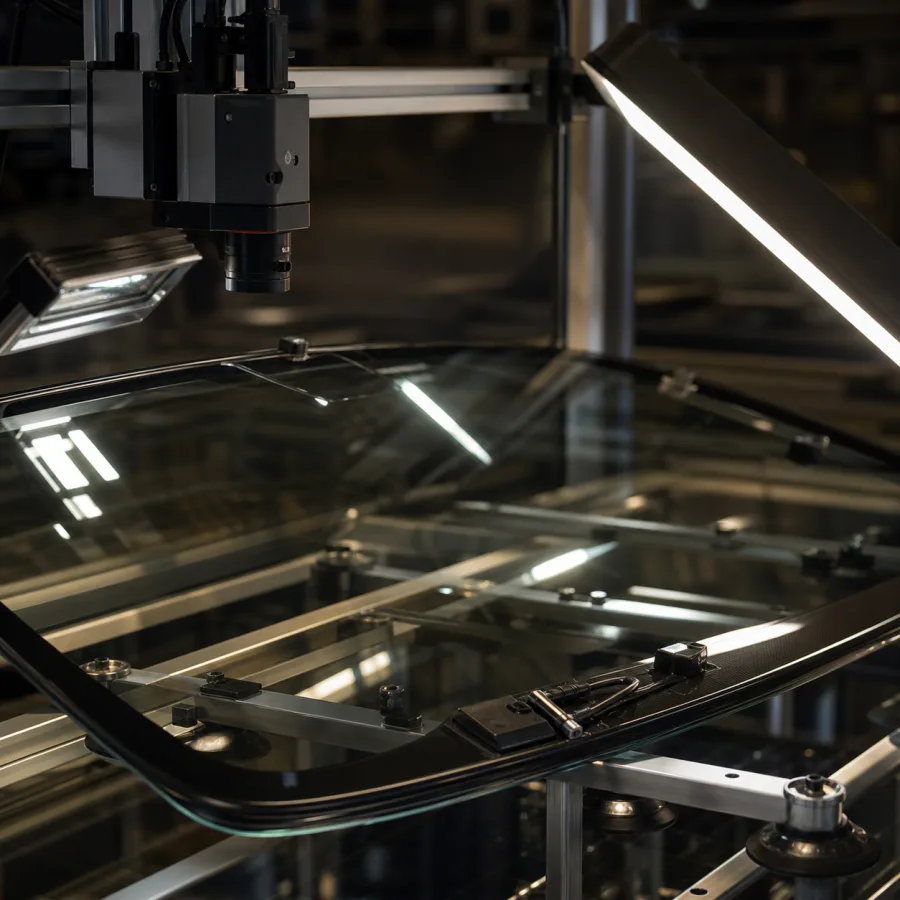
Dozens of glass models, each with its own set of elements, all of which must sit exactly where they belong. The classic trap: tune the inspection for one model — and it falls apart on the next.
Cameras with polarizing filters and angled lighting — and above all, a recipe library: every glass model has its own ready set of verification settings. A model change on the line is a pick from a list, not a re-tune.
Element-position verification works across the whole range; a new glass model is added as a recipe in the library. It's the clearest possible answer to "what happens when the product changes".
| Task | element positions, dozens of models |
|---|---|
| Variability | a recipe per model — switched from a list |
| Setup | monochrome cameras, polarizing filters, angled lighting, recipe library |
| Budget | from SAR 78,750 |
Check my assembly the same way
Pharma
Pharma packaging adds a code on every carton to the completeness question: it has to be verified and recorded. By hand that's slow and error-prone.
A code verification station: a reader, a sensor and automatic delivery of the result into the records system — the human is out of that chain.
Every package now has a digital verification trail, and manual entry — with its errors — left the process.
| Task | package verification + a record in the system |
|---|---|
| Setup | reader, sensor, records integration |
| Budget | from SAR 12,750 |
Check my assembly the same way
TEST YOURSELF
That's exactly how long the line operator gets. Ready?
That's exactly how long the line operator gets. Ready?
It's not about how attentive people are — this kind of check simply isn't for eyes. Send a photo of your kit: we'll show you on video how the camera checks it.
demo kit; the check time is typical for a smart-camera completeness station
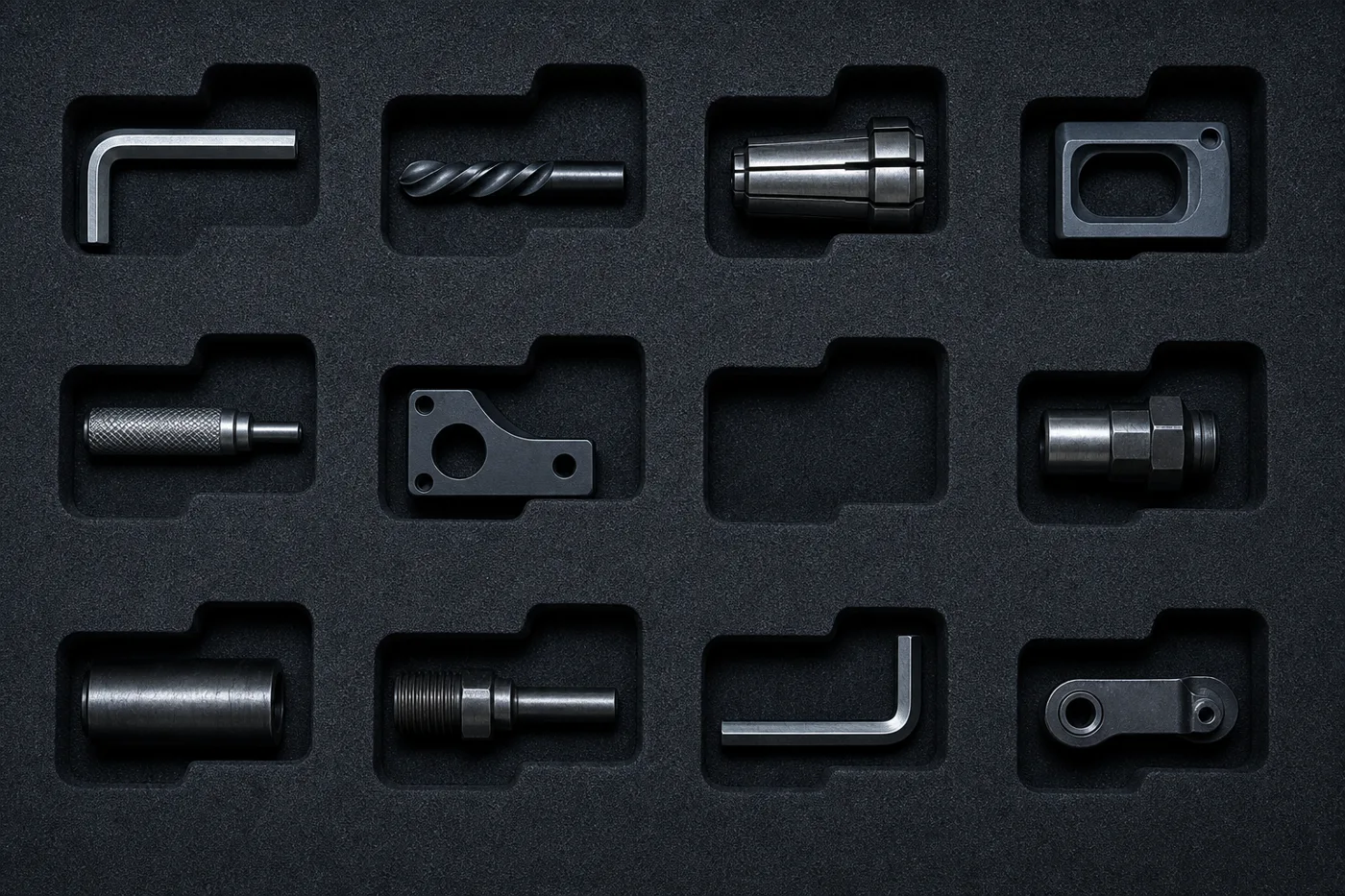
What was missing?
FOUND 11 OF 12 · missing: cavity 7 (middle row) · verdict: INCOMPLETE · check time: ~60 ms
It's not about how attentive people are — this kind of check simply isn't for eyes. Send a photo of your kit: we'll show you on video how the camera checks it.
demo kit; the check time is typical for a smart-camera completeness station
FREE CHECK ON YOUR SAMPLES
Two photos are enough to start: one complete kit, and one intentionally incomplete — just take a couple of items out. The full test runs on physical samples.
your kit on the bench: complete, missing an item, and with one item misoriented.
what we catch, with what equipment, what the station is made of, roughly what it costs and where the risks are.
a specific bill of materials and entry-level figures.
how to store kit variants and switch between them. A table you'll find useful whoever you buy from.
what to check on your side before installation.
faster? message a photo of the station or the kit — you'll get a preliminary verdict
Five things we verify in every assembly task.
We treat two situations separately. Switching between known variants is picking a recipe from a list — your line lead does it. Introducing a new product means creating a reference and tolerances — we train your line lead on that at launch. But if the viewing angle or the light changes — that one's on us.
Confirming a part is present isn't enough. We verify it's THE part — by geometry, color or marking.
Sometimes neighboring parts block the view. We choose the angle and the number of cameras for your actual tray — not for a perfect catalog picture.
Inspection strictness is tuned during the pilot together with your process engineer: how much caution is acceptable is your call, and we show what each option gives.
Wherever possible, the response is non-disruptive — an on-screen prompt, not a full line stop. Where an error must not advance — a process interlock blocks that specific step.
One check, the fastest possible start.
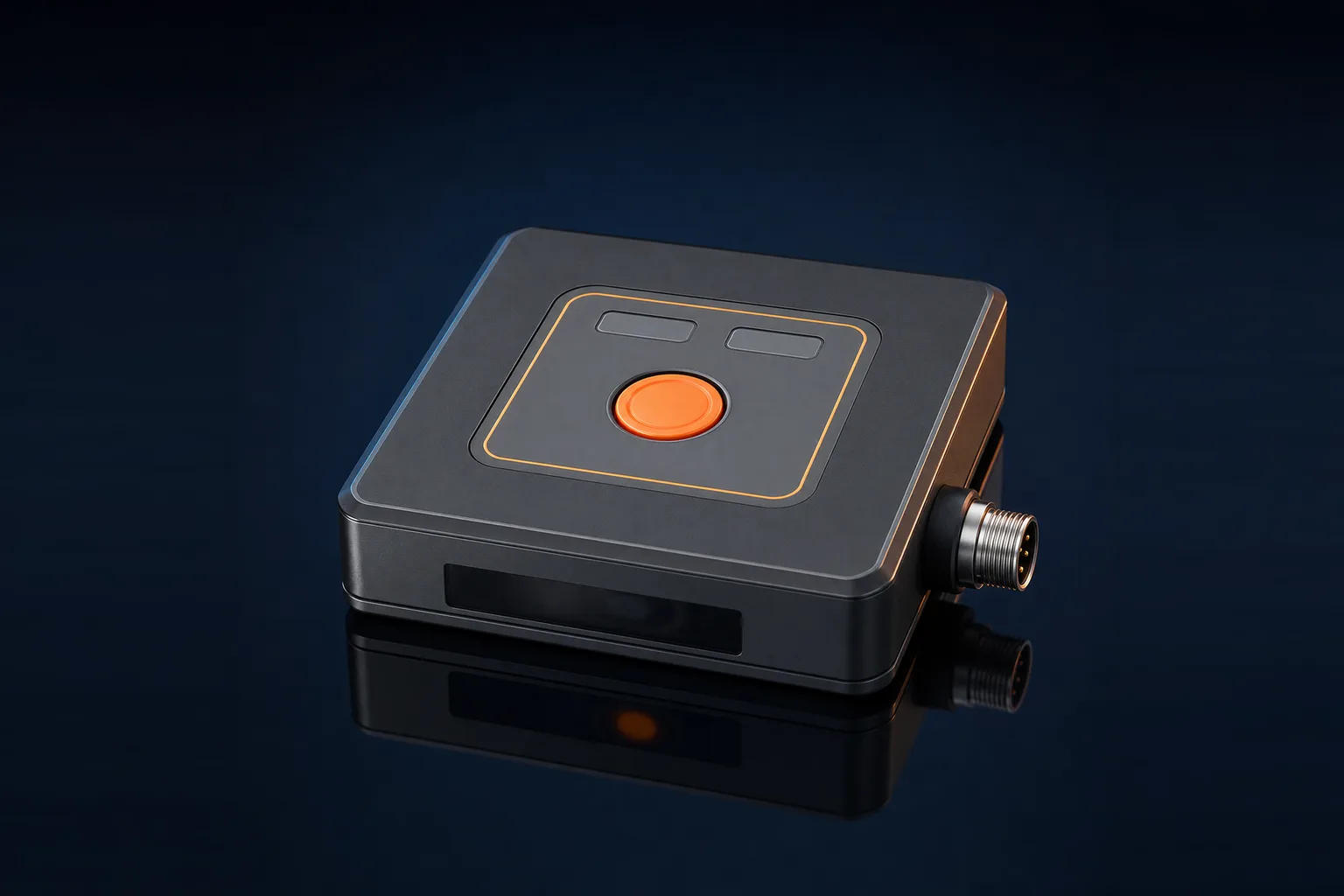
The "assembly kit" case level.
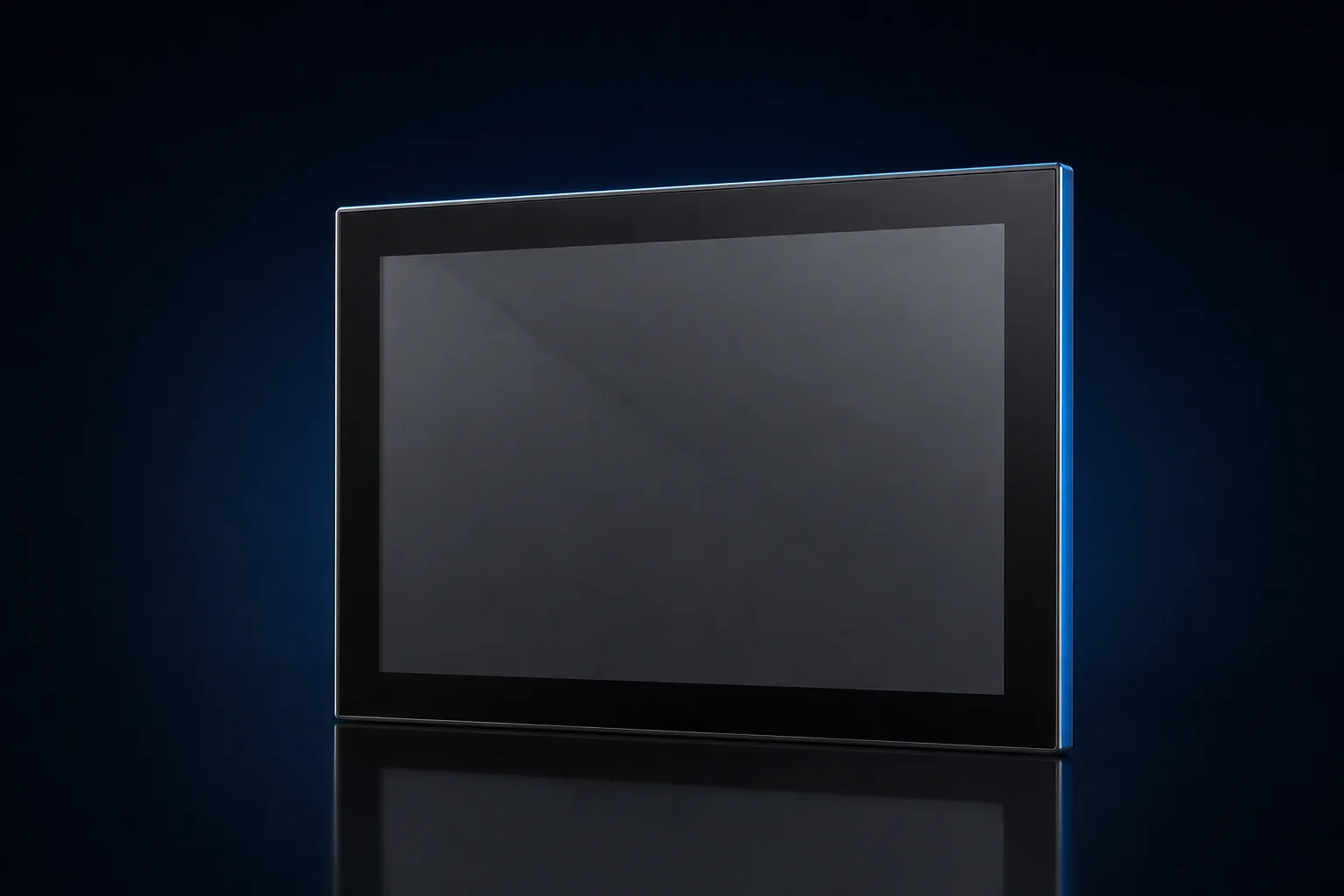
the image, the verdict and the "cavity 7 is empty" prompt on one screen; connects up to 4 cameras.
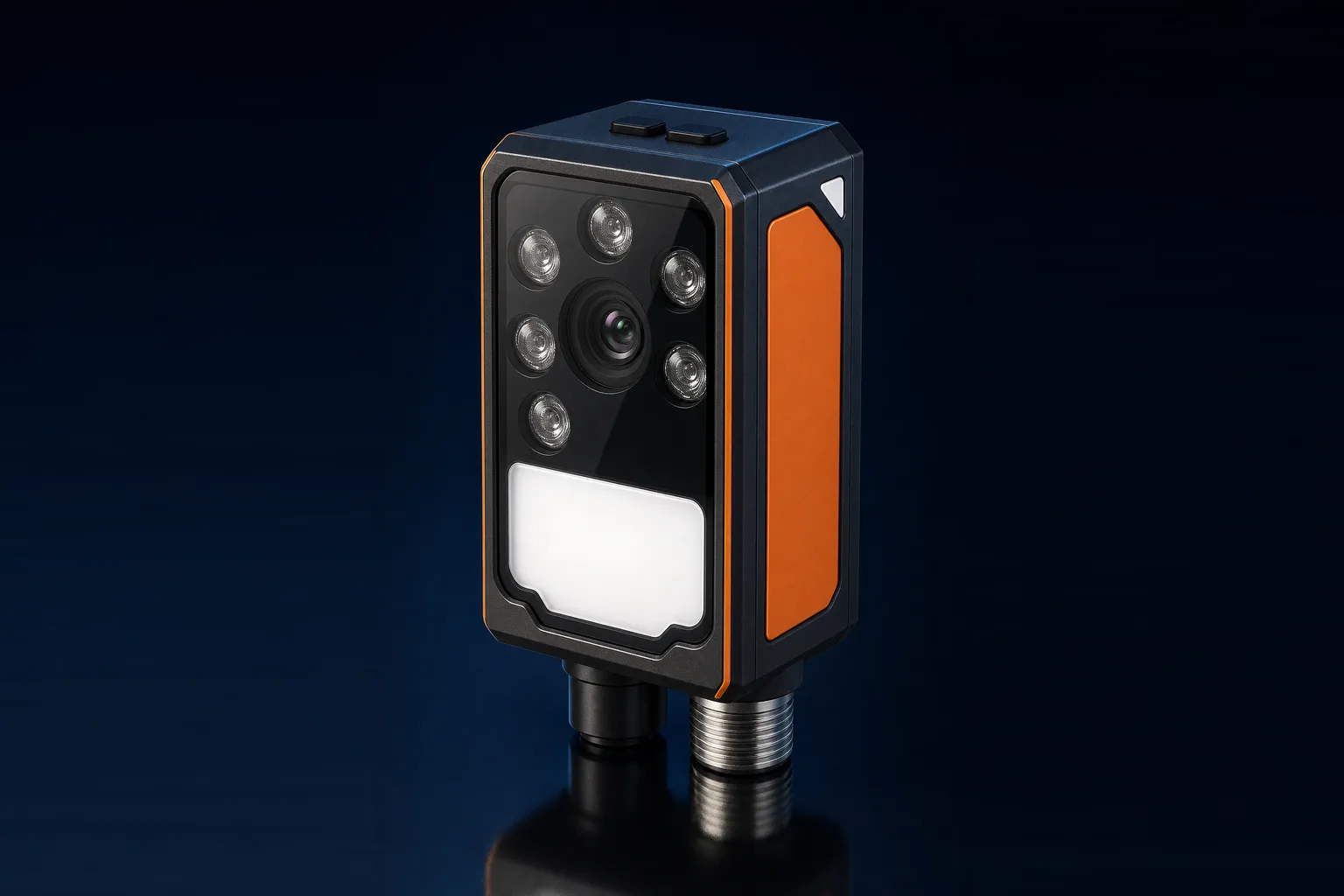
checks along the assembly flow, recipes, a feed into records — from ~SAR 24,375.
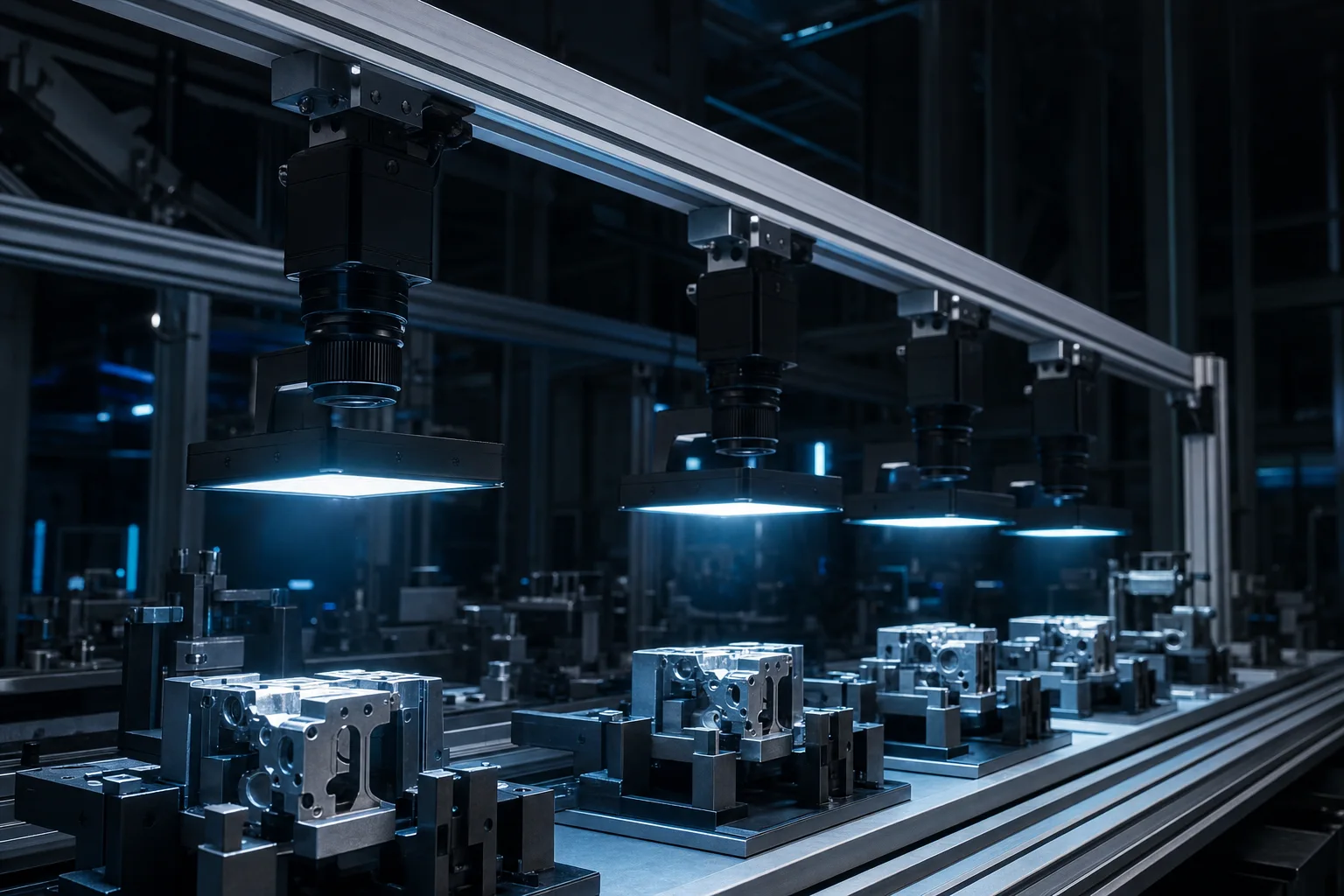
You send samples or photos: the complete kit and the typical assembly mistakes.
Together we map out which kits you run and how often they change — that's the draft of your future recipe library.
We agree on what happens when something's missing: an operator prompt, a blocked step, or a record in the system.
Strictness is tuned on your line, and your line lead learns to switch recipes independently.
Switching between ready recipes — your line lead, trained at launch. Adding product variants within the validated camera view — also your line lead, after training. Engineering review is only needed when the fixturing, camera angle or lighting changes.
from supplying a camera to launching a turnkey station.
equipment ships straight from the Hikrobot factory; stock items arrive in about two weeks by air.
the person who tested your kit is the person who commissions your station.
we bench-test on your samples, then support your site team or local integrator with remote tuning and training.
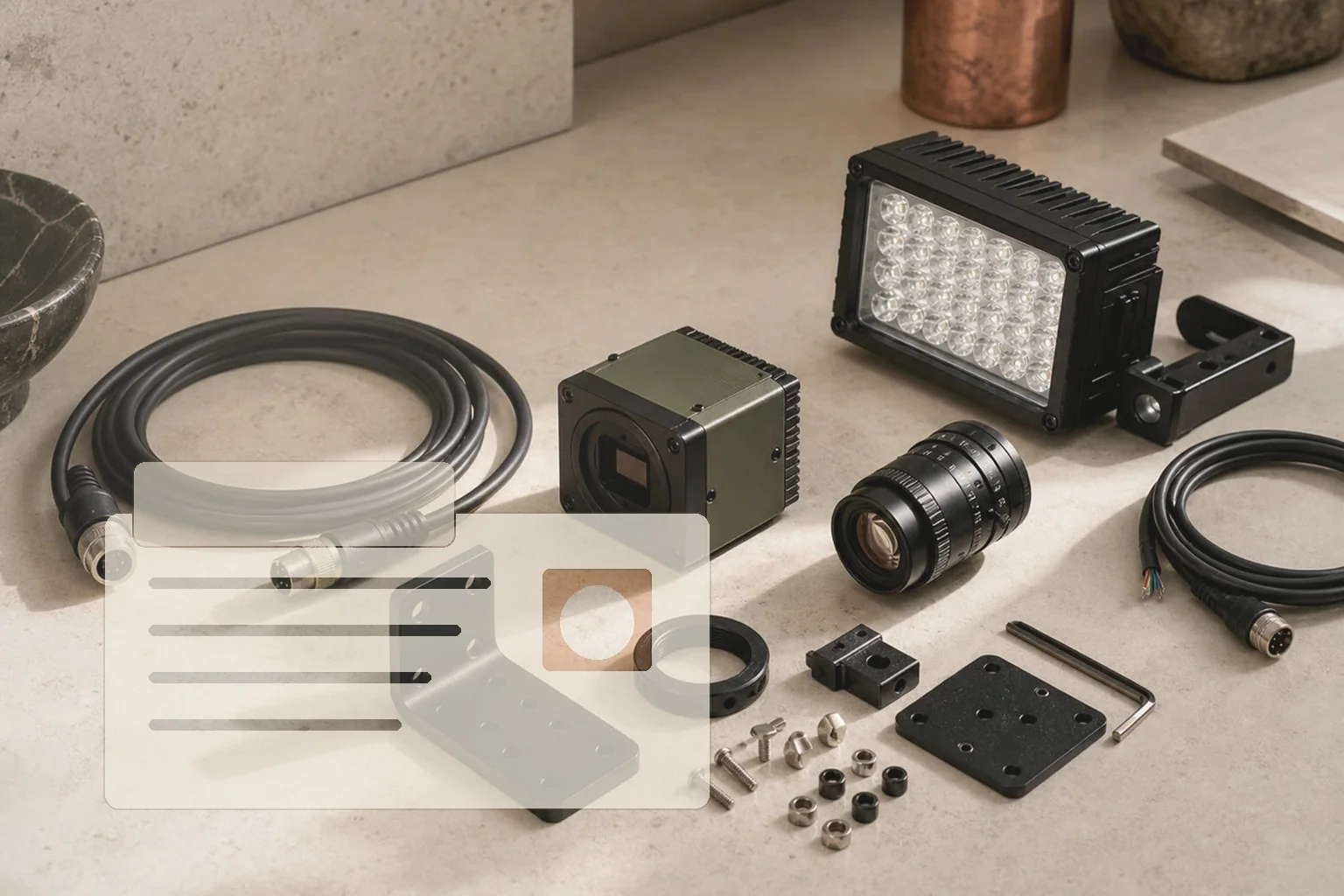
We test production samples under a camera, record the run, and send an engineer’s report. Free, in 2–3 business days.
A new product variant is a new recipe: reference photos plus tolerances. Your line lead creates it — we teach that at launch. Engineering involvement is only needed if the station's mechanics themselves change.
That's tuned during the pilot. A tighter threshold — more caution; a softer one — more risk of letting an error through. The decision is yours, and we show what each option gives — on your own samples.
A properly built station watches the KIT, not the person: the "cavity 7 is empty" prompt helps the operator, it doesn't police them. How to present it to the shift — we'll share what's worked; we've been through this more than once.
Yes. A packing layout is just another recipe: the layout changes, the line lead picks a different recipe.
Popular cameras and sensors are factory stock — in-stock items typically arrive by air in about two weeks, depending on destination and customs. Rare items are made to order, and then the date is fixed in the quote.
A vision engineer, via the channel you chose.
The test runs at our bench on your samples. Installation goes into your maintenance window.
A video of your kit being verified, an engineering report and a quote — plus the recipe matrix and the line-prep checklist. All of it 2–3 business days after your samples arrive. If the task is solved by a SAR 562.50 sensor instead of a SAR 24,375 station — that's what we'll say.
2 minutes to applyan engineer replies within 4 business hours