Area camera · CU series
Hikrobot MV-CU013-80GC
- Warranty
- 36 months
Applications and neighbours at 1.3 MP
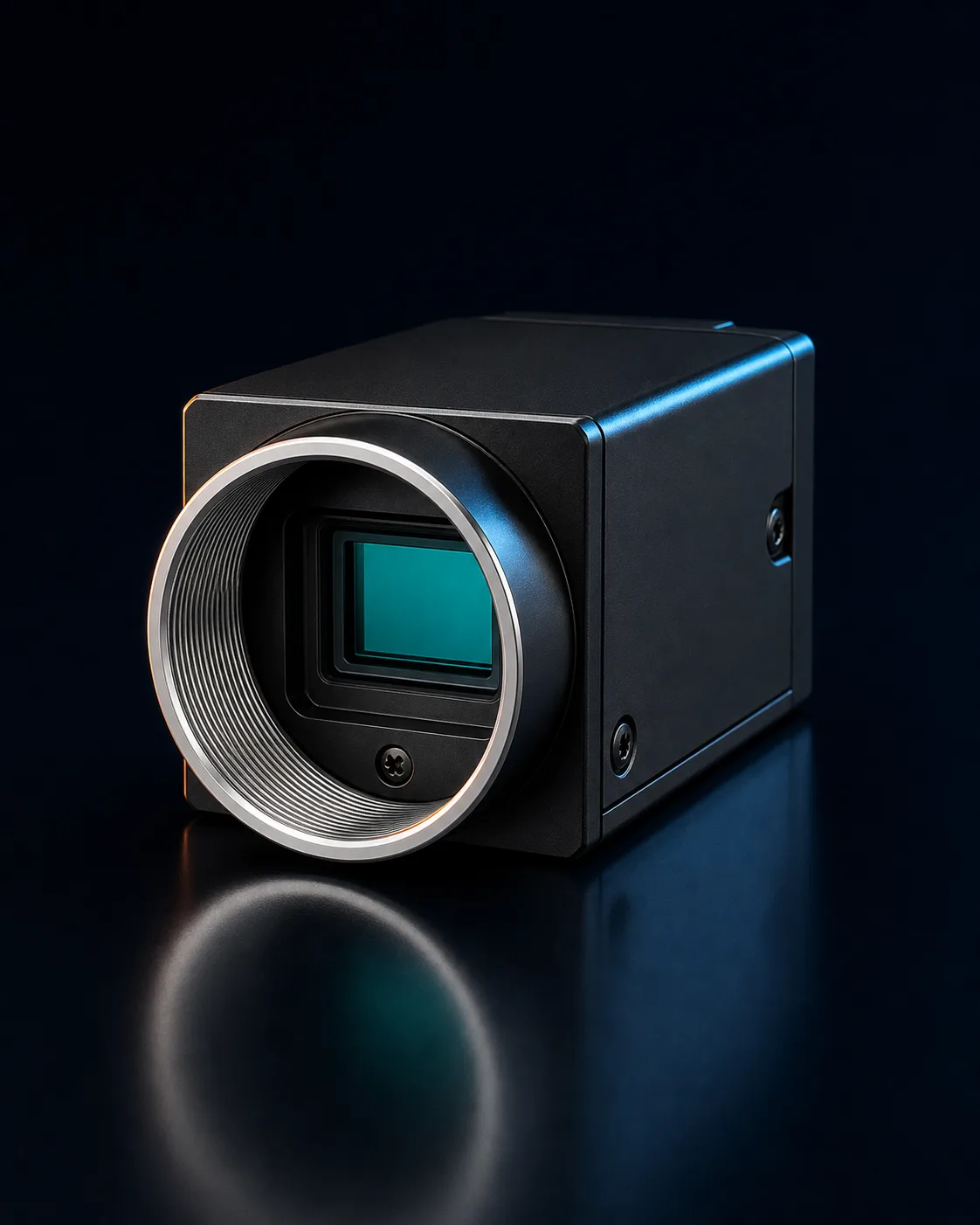
Global-shutter capture at 1280 × 1024 and 89.9 fps defines MV-CU013-80GC. The 1/2.7-inch CMOS sensor feeds a Gigabit Ethernet interface, giving this model a middle position between the very fast 720 × 540 cameras and higher-resolution CU variants. A C-mount accepts lenses sized for the compact sensor format, and the camera body weighs 100 g.
The simultaneous exposure is suited to moving-component presence, alignment and shape checks where 1280 × 1024 supplies more sampling than 720 × 540. Hardware coordination is available through one opto-isolated input, one opto-isolated output and one bidirectional non-isolated I/O. The 9–24 V DC input supports installation on common machine power rails.
MV-CU013-80GM matches the 1280 × 1024 grid and 89.9 fps rate while explicitly producing Mono output. MV-CU004-10GC trades resolution down to 720 × 540 for 126.5 fps and stated color capture. MV-CU013-A0GC keeps 1280 × 1024, adds stated color, uses a larger 1/2-inch sensor and reaches 91.3 fps. Choose this model for the 1/2.7-inch GigE configuration.
Available versions
One device, different revisions. We ship the current one by default; if a specific revision is already installed on your line, name it in the request and we will match it.
| Part number | PN | Version | |
|---|---|---|---|
| MV-CU013-80GC | — | — | |
| MV-CU013-80GC V2.0 | 306303585 | V2.0 |
Specifications
| Sensor type | CMOS, global shutter |
| Sensor format | 1/2.7″ |
| Resolution | 1280 × 1024 px |
| Maximum frame rate | 89.9 fps |
| Data interface | Gigabit Ethernet |
| Digital I/O | 1 opto-isolated input, 1 opto-isolated output, 1 bi-directional non-isolated I/O |
| Lens mount | C-mount |
| Power supply | 9 to 24 VDC |
| Power consumption typ | 2.2 W |
| Ingress protection | IP30 |
| Operating temperature | 0 to 50 °C |
| Weight | 100 g |
| Protocol compatibility | GigE Vision V2.0, GenICam |
Selection and applications
Moving-part alignment at 1280 × 1024. Fast presence inspection over Gigabit Ethernet. Sensor-synchronised area capture.
Minimum kit: Start with the camera, a C-mount lens covering 1/2.7 inch, a Gigabit Ethernet cable and a 9–24 V DC power source.
Nearby in the range: MV-CU013-80GM — Select it when the same 1280 × 1024 at 89.9 fps is required with stated Mono output.; MV-CU013-A0GC — Select it for stated color output, a 1/2-inch sensor and 91.3 fps at the same resolution.; MV-CU004-10GC — Select it when 126.5 fps matters more than the reduction to 720 × 540..
Cables and accessories for this model
Compatibility per manufacturer data.
- Data cables
- GigE
- Power
- Power
- Mounting
- Camera mounts
FAQ
How much motion can MV-CU013-80GC capture without geometric skew?
Its CMOS sensor uses a global shutter and records 1280 × 1024 at up to 89.9 fps. Simultaneous frame exposure addresses geometric skew from line-by-line readout; actual blur still depends on illumination, target speed and the chosen exposure.
What lens family should be considered for the 1/2.7-inch sensor?
The mechanical interface is C-mount and the sensor format is 1/2.7 inch. A lens should cover that format and provide the required scene coverage and working distance at 1280 × 1024, without relying on an image circle intended for a smaller sensor.
Which network and supply connections does MV-CU013-80GC require?
Image transfer uses Gigabit Ethernet. Camera power is specified as 9–24 V DC, and typical consumption is 2.2 W. The installation therefore needs a Gigabit Ethernet data path and an external supply within that voltage range.
Can the camera be tied to a sensor and actuator at the machine?
Yes. The listed I/O comprises one opto-isolated input, one opto-isolated output and one bidirectional non-isolated I/O. These lines can carry acquisition timing and a result or control signal alongside the Ethernet image connection.
What environmental boundary applies to the MV-CU013-80GC housing?
The camera is specified for operation from 0 °C to 50 °C and carries an IP30 ingress rating. It should therefore be integrated where the stated temperature range is maintained and where the surrounding machine structure provides any required added contamination protection.