Area-Scan Cameras
Hikrobot area scan cameras for inspection, verification and measurement: GigE and USB interfaces, 1.3 to 12+ MP, global and rolling shutter options.
GigE area scan cameras
220 models
USB 3.0 area scan cameras
163 models
CoaXPress area scan cameras
53 models
10 GigE and fibre area scan cameras
41 models
Camera Link area scan cameras
8 models
Other versions
| Model | Resolution | Frame rate | Sensor | Interface |
|---|---|---|---|---|
| MV-CS028-10UMArea camera | 1936 × 1464 px | 132.2 fps | 2/3″ | USB3.0… |
Frame-camera selection by imaging task
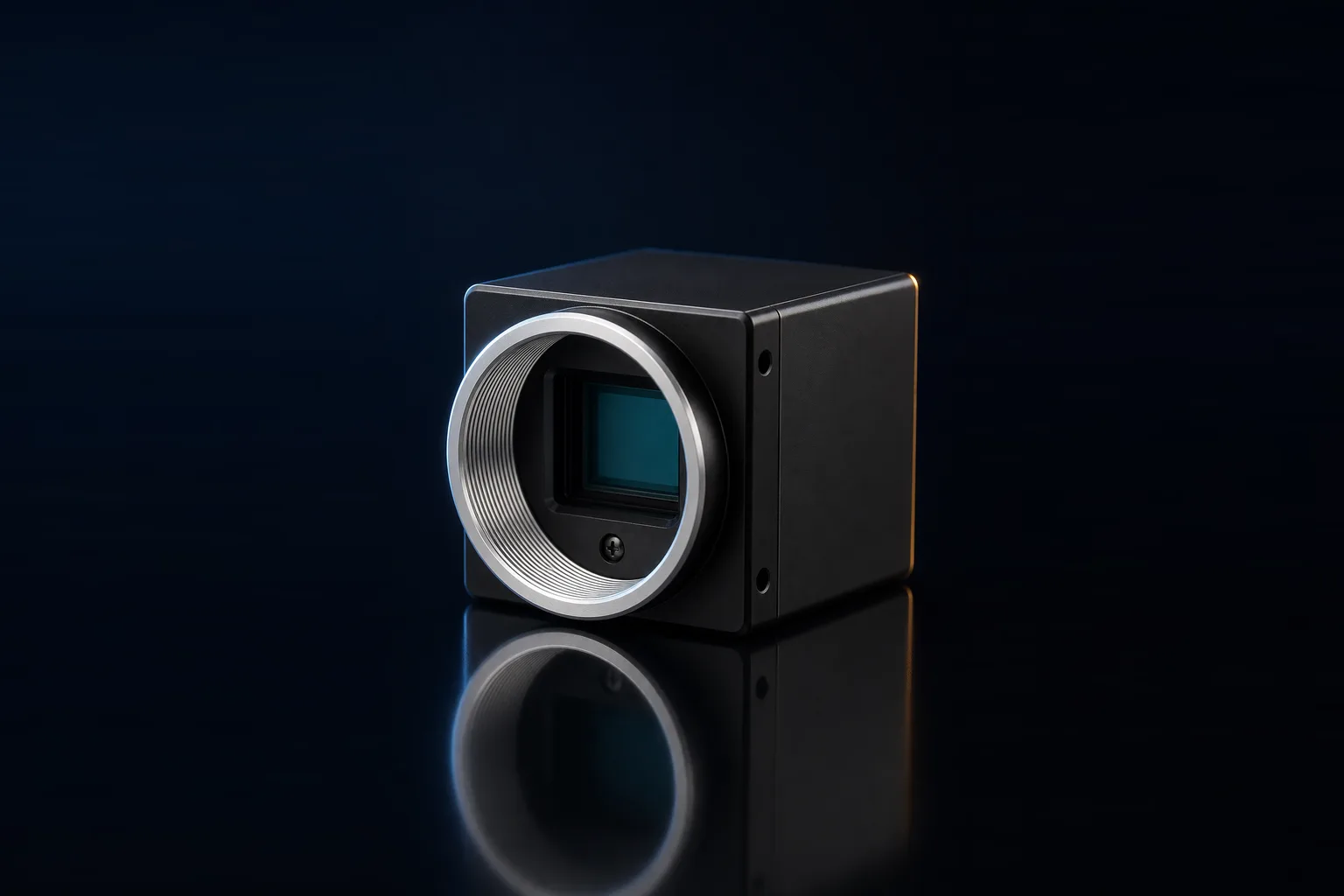
Area-scan cameras acquire a frame rather than the line used by a line-scan camera. The category covers inspection, verification and measurement with GigE, USB 3.0, CoaXPress, 10 GigE and fibre, and Camera Link groups. The five core camera cards span monochrome and color versions for 2D machine-vision imaging.
Start with field of view and the smallest feature or defect. Resolution and magnification set object-space sampling, while the sensor format controls the image circle required from the lens. Motion, line speed and trigger timing then determine the needed frame rate and shutter behavior. Also establish working distance, color need, cable run, environment and available illumination before narrowing the interface group.
The five core models range from 1.56 MP at 1440 × 1080 to 12.29 MP at 4096 × 3000, with documented full-resolution rates from 9.5/10 to 249.1 fps. They use global-shutter CMOS sensors and C-mount, while formats extend from 1/2.9-inch to 1.1-inch. GigE versions use Gigabit Ethernet compatible with Fast Ethernet; USB versions use USB 3.0 compatible with USB 2.0.
Range structure also reflects interface scale: GigE has 220 models, USB 3.0 has 163, CoaXPress has 53, 10 GigE and fibre has 41, and Camera Link has 8. Do not treat the shared C-mount as proof that one lens fits every camera. Confirm that the lens image circle covers the selected sensor and assess focal length, working distance, distortion and contrast for the required scene.
FAQ
What establishes the required camera resolution?
Use the required field of view together with the smallest feature or defect. The core range runs from 1.56 MP at 1440 × 1080 to 12.29 MP at 4096 × 3000, but object-space sampling also depends on pixel size and magnification.
How should motion influence the frame-camera choice?
Compare motion, line speed and trigger timing with full-resolution frame rate. The documented core rates extend from 9.5/10 to 249.1 fps, and all five core cameras use global-shutter CMOS sensors.
Which interface families are represented in the category?
The groups are GigE, USB 3.0, CoaXPress, 10 GigE and fibre, and Camera Link. For the core models, GigE is Gigabit Ethernet compatible with Fast Ethernet, while USB 3.0 is compatible with USB 2.0.
Can one C-mount lens cover every core camera?
C-mount is shared, but sensor formats span 1/2.9-inch to 1.1-inch. The lens image circle must cover the chosen sensor; focal length, sensor size and working distance then determine field of view.
When is a color model justified over monochrome?
Choose between monochrome and color from the inspection itself: determine whether the decision needs actual color information or only contrast. Available illumination is another stated input to that choice.
An area-scan camera, also called an area camera or frame camera, is a separate acquisition class from a line-scan camera. This guide focuses on the five evidenced 2D machine-vision camera cards in the English core. Compare the required field of view, smallest feature or defect, motion and line speed, working distance, color need, cable run, trigger timing, environment, and available illumination before selecting a model.
Core specification envelope
The five core industrial camera cards span 1.56 MP at 1440 × 1080 to 12.29 MP at 4096 × 3000. Sensor formats run from 1/2.9-inch to 1.1-inch, with monochrome and color models. Documented full-resolution frame rates run from 9.5/10 to 249.1 fps.
Shutter, mount, and interface
All five core cameras use global-shutter CMOS sensors and C-mount. GigE models use Gigabit Ethernet compatible with Fast Ethernet. USB models use USB 3.0 compatible with USB 2.0.
Core models and ordering identifiers
The evidenced identifiers are MV-CS016-10UC V5.0, PN 306303445; MV-CA050-20GM, PN 306300053; MV-CH120-60GM V5.0, PN 306303293; and MV-CH120-60UC V5.0, PN 306303290. For MV-CS016-10GM the ordering part number should be confirmed with our engineers before purchase. Open each model card for its individual specification set.
Lens matching is part of camera selection
A lens must cover the camera sensor and image circle. Focal length, sensor size, and working distance determine field of view, while pixel size and magnification determine object-space sampling. The five core cameras share C-mount but do not share one sensor format.
FAQ
Do you need monochrome or color, and is the decision based on actual color information or only contrast?
The five core cards include monochrome and color variants. Color need and available illumination are documented selection inputs and should be established before choosing between those variants.
Will the selected C-mount lens cover the sensor format and resolve the required feature size without unacceptable distortion?
All five core cameras use C-mount, but their sensor formats span 1/2.9-inch to 1.1-inch. The lens image circle must cover the sensor; pixel size and magnification determine object-space sampling, while distortion and contrast require separate evaluation.